You have been doing your maintenance eyelid hygiene regularly.
Then one morning, you wake up and something feels different.
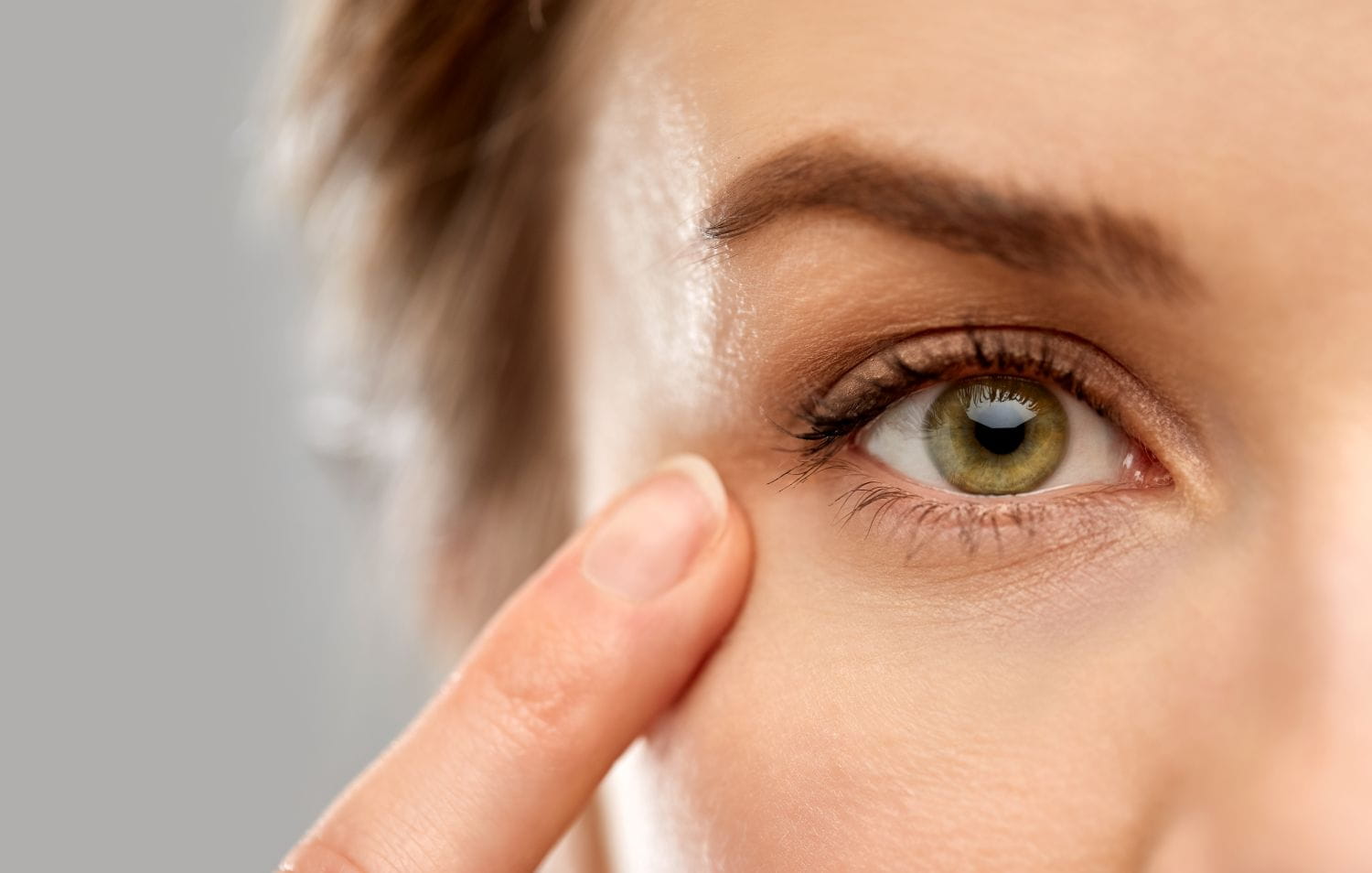
Your eyelid feels:
- Sore when you blink
- Slightly itchy
- Uncomfortable
- Swollen
You recognise that familiar feeling and think: "Something is starting. I need to get on with my warm compresses."
You start doing your warm compresses properly:
Five times a day, five minutes each time.
You have done everything correctly.
But after two days, there is still no improvement. Instead:
- The lump is becoming more obvious
- The eyelid is getting more swollen
- There is increasing redness or discomfort
What do you do next?
Don't automatically reach for antibiotics
A common reaction is to search online, go to a pharmacy, or ask for antibiotics.
However, it is important to understand that a chalazion is usually not an infection.
It is primarily an inflammatory problem.
The issue is that the oil produced by the meibomian gland has become trapped. The oil should normally flow out through the eyelid margin, but when the gland becomes blocked, the secretion accumulates inside the eyelid.
Inside the eyelid there is a firm structural layer called the tarsus — a supportive cartilage-like plate.
The chalazion develops within this structure.
This is why a chalazion is different from a simple spot or pimple on the skin.
You cannot simply "pop" it.
The meibomian secretion that is trapped within the eyelid tissue triggers an inflammatory response.
When to see an ophthalmologist
If you have:
- Started early treatment
- Done your warm compresses diligently
- And there is no improvement after a couple of days
then this is the time to arrange an assessment with an ophthalmologist.
The aim is to control the inflammation early.
An ophthalmologist may prescribe an ointment containing a combination of:
- An antibiotic component, to reduce the risk of bacterial overgrowth
- A steroid component, to reduce the inflammatory response
The steroid component is particularly important because the symptoms you experience — swelling, redness, soreness, irritation — are caused by inflammation.
Why controlling inflammation matters
If inflammation continues unchecked, nearby meibomian glands can also become affected.
These glands sit very close together.
One blocked gland can trigger inflammation around neighbouring glands, potentially leading to multiple blocked glands and multiple cyst-like swellings.
These can become:
- More noticeable
- More uncomfortable
- More difficult to settle
So the goal is not just to treat the lump you can see.
The goal is to calm the inflammatory process before it gets out of control.
How to apply the ointment effectively
The steroid treatment is usually given in the form of an ointment.
A chalazion sits in the middle of the eyelid:
- On the outside is the eyelid skin
- On the inside is the conjunctiva (the pink lining on the back surface of the eyelid)
- In between is the tarsus where the chalazion forms
Because the lump sits between these two surfaces, applying treatment from both sides helps it reach the area more effectively.
Applying to the outside of the eyelid
Wash your hands first.
You only need a tiny amount of ointment on a clean fingertip.
Apply a small amount over the area of the lump on the eyelid skin.
Applying to the inside of the eyelid
For chalazions on both upper and lower eyelid:
- Wash your hands
- Put a small amount of ointment on your clean fingertip
- Gently pull down the lower eyelid
- You will see the pink inner surface of the eyelid
- Place the ointment into this pink pocket
- Blink a few times
The ointment will spread across the eye surface to the back surface of both top and bottom eyelids.
How often should you use it?
In my practice, I usually recommend a 2-week course:
Four times a day for one week, then twice a day for the following week.
The reason is that the inflammation needs to be treated consistently.
Using it only once or twice a day may not be enough to control the inflammatory process, and it can simply prolong the course of the chalazion.
Even if you feel much better after a few days, do not stop suddenly.
Steroid-containing treatments need to be reduced gradually.
This is because stopping steroids abruptly can allow the inflammation to rebound.
A gradual reduction gives the eyelid time to settle.
Continue your hot compresses
While using the ointment, continue your warm compresses.
The aim is to:
- Keep the contents of the blocked gland soft
- Encourage natural drainage
- Support the healing process
You should expect the chalazion to gradually reduce rather than disappear overnight.
With early intervention and consistent treatment, the inflammation can often be brought under control before it becomes a more persistent lump.
The key message
- ✓ A chalazion is an inflammatory problem, not usually an infection
- ✓ If warm compresses alone are not working after a couple of days, seek an ophthalmology assessment
- ✓ Apply ointment from both the outside and inside of the eyelid
- ✓ Complete the full course and reduce gradually — do not stop suddenly
- ✓ Continue warm compresses throughout treatment
Early intervention gives the best chance of settling the inflammation before it becomes a persistent lump.
Important information
The information provided in this article is intended for general educational purposes only and should not be considered personalised medical advice or a substitute for a clinical assessment. Eyelid conditions can vary significantly between individuals, and if you have concerns about your eyelids, symptoms, or a specific problem, you should seek advice from a qualified healthcare professional, such as an ophthalmologist or oculoplastic surgeon.
This article is intended to provide general guidance and help you better understand common eyelid conditions, treatments, and when further assessment may be appropriate.
I have no financial interest, sponsorship, or conflict of interest relating to any of the products mentioned in this article. The products discussed are those that I consider reputable and reliable based on my clinical experience and personal use in practice; they are mentioned purely for educational purposes and are not paid recommendations.