Am I Too Young or Too Old for Upper Blepharoplasty?
Upper blepharoplasty is one of the most commonly performed procedures for eyelid rejuvenation. It is highly effective for treating hooded upper eyelids and excess skin, offering a significant improvement with relatively short downtime. When performed by an experienced oculoplastic surgeon, it is also a very safe and predictable procedure.
A very common question is:
Am I too young or too old for upper blepharoplasty?
There is no ideal age for upper blepharoplasty. You are not too young or too old. Suitability depends on your eyelid anatomy, genetics, and symptoms rather than age. If excess upper eyelid skin affects your appearance, comfort, or vision, you may benefit from surgery at almost any age.
What is upper blepharoplasty?
Upper blepharoplasty (upper eyelid surgery) removes excess skin from the upper eyelids. In some cases, a small amount of muscle or fat may be adjusted to improve contour and symmetry.
The goal is not to change your appearance, but to restore a more refreshed, open, and natural look.
Genetics matter more than age
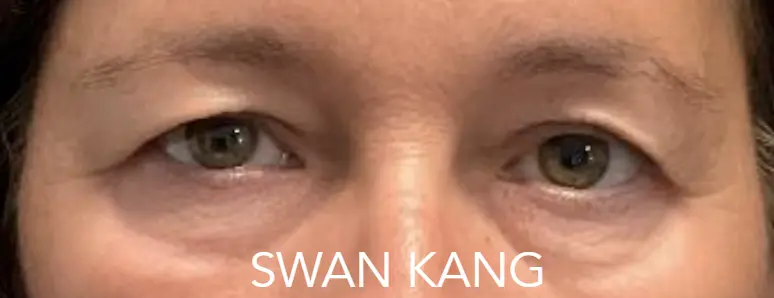
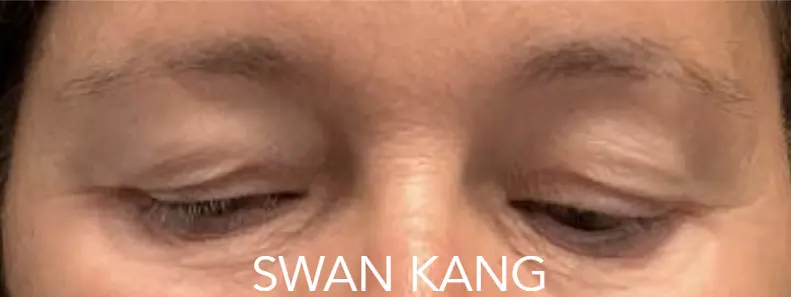
Many patients develop hooded eyelids in their 20s or 30s due to genetics rather than ageing. Others only experience changes later in life.
The key factor is not age, but whether eyelid structure causes functional or aesthetic concerns.
When do hooded eyelids become a problem?
Hooded eyelids may cause:
- Heavy upper eyelids
- Forehead strain from eyebrow compensation
- Difficulty applying eye makeup
- Makeup transferring onto skin
- Loss of visible eyelid crease
- Reduced upper visual field
Upper blepharoplasty is considered when excess upper eyelid skin causes heaviness, vision changes, difficulty with makeup, or noticeable asymmetry.
Eyelid asymmetry (very common)
One of the most frequent concerns is asymmetry.
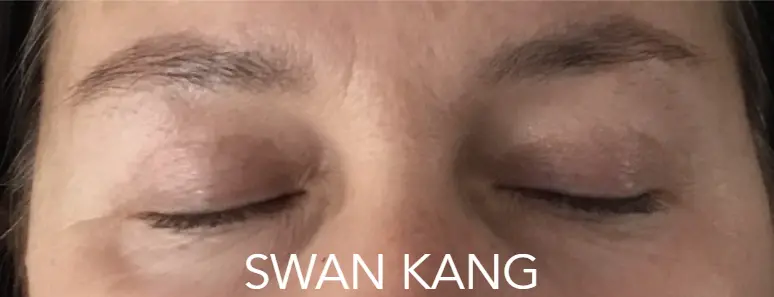
As skin laxity develops unevenly, one eyelid may appear more hooded than the other. This can make the eyes look unbalanced, particularly in photographs.
Upper blepharoplasty can improve symmetry by carefully adjusting skin removal on each side and refining the eyelid crease.
Perfect symmetry is not achievable in nature, but surgery can significantly improve balance and facial harmony.
Has Botox changed when patients consider surgery?
Botulinum toxin (Botox®) relaxes the frontalis muscle, which lifts the eyebrows. When this muscle is weakened, the brows may descend slightly.
In patients with pre-existing hooded eyelids, this can increase upper eyelid heaviness. As a result, some patients consider upper blepharoplasty earlier, especially if they receive regular Botox treatments.
Am I too young for upper blepharoplasty?
There is no minimum age.
You may be suitable if you have:
- Genetic hooded eyelids
- Early excess upper eyelid skin
- Heavy eyelids
- Makeup difficulties
- Functional or aesthetic asymmetry
You are not too young if your eyelid anatomy causes symptoms or concerns. Suitability depends on structure and function, not age.
Am I too old for upper blepharoplasty?
You are not too old.
Upper blepharoplasty can be safely performed at almost any age, provided you are medically fit.
Older patients often see significant improvement due to greater skin excess. However, recovery may involve more bruising and swelling compared with younger patients. This does not affect final results but should be expected during healing.
You are never too old for upper blepharoplasty if you are medically suitable. Benefits are often greater when there is more excess skin to remove.
How long do results last?
Results typically last around 10 years or more, depending on:
- Genetics
- Skin quality
- Sun exposure
- Smoking
- Eyelid anatomy
- Lifestyle factors
Can upper blepharoplasty be repeated?
Yes.
Upper blepharoplasty can be repeated if needed. The procedure involves superficial layers of the eyelid, and revision surgery is generally safe in experienced hands.
There is a slightly increased risk of scarring with repeat surgery, but outcomes remain excellent in appropriately selected patients.
Is there an ideal age for upper blepharoplasty?
No. Suitability depends on eyelid anatomy and symptoms rather than age.
Can you be too young for upper blepharoplasty?
No. Younger patients may benefit if they have genetic hooding or functional concerns.
Can you be too old for upper blepharoplasty?
No. Age is not a limitation if you are medically fit.
How long do results last?
Typically around 10 years or longer.
Does Botox worsen eyelid heaviness?
It can in some patients by lowering the brow position.
Can the procedure be repeated?
Yes. Revision surgery is possible if required.